Honda vs Yamaha Generators: Specifications Compared
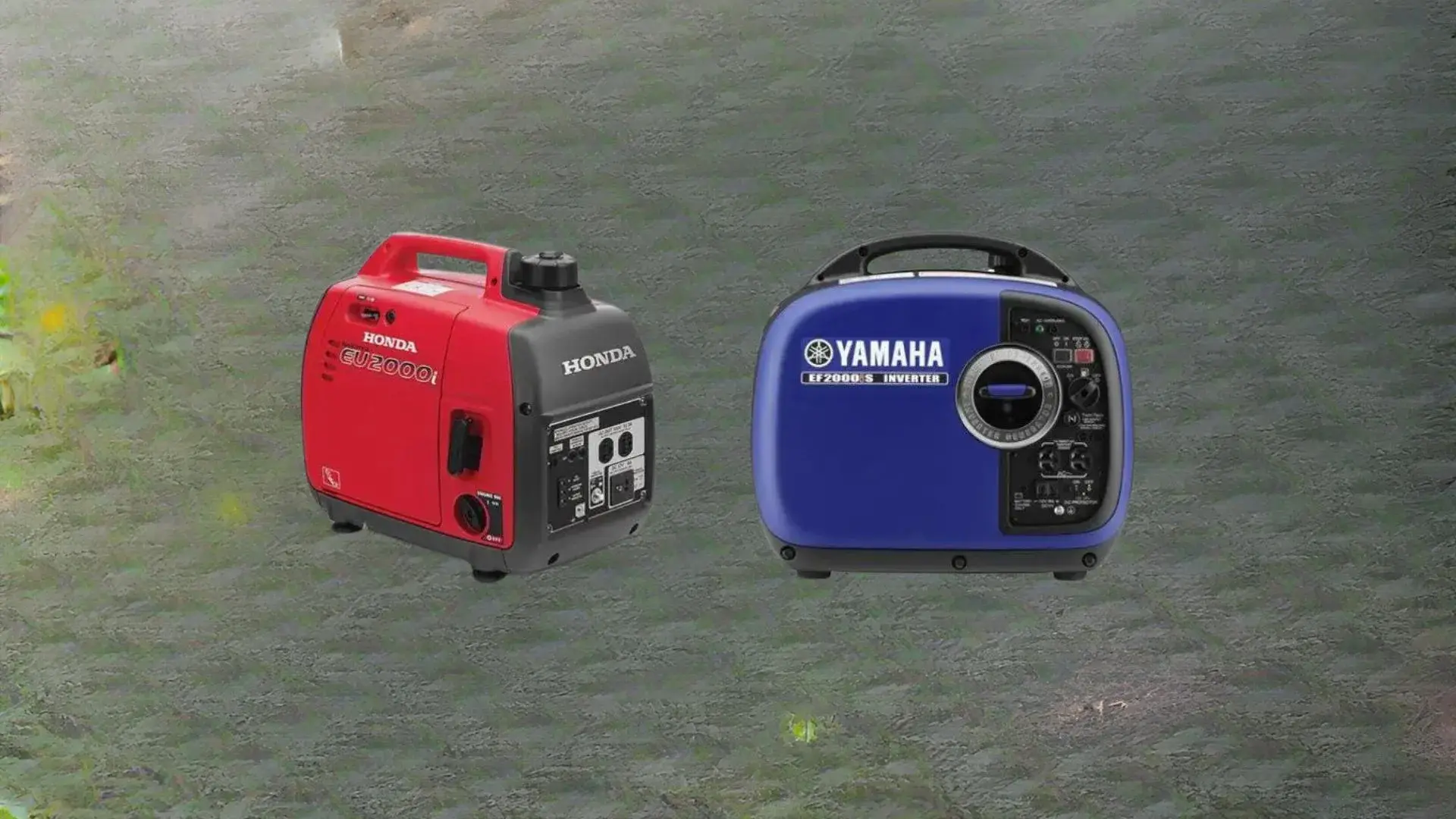
Honda and Yamaha both make well-known inverter generators, and shoppers often ask which is better. This guide compares the models of each brand in our generator comparison tool using figures the makers publish, retrieved on 4 November 2026. We have no reliability or service-cost data for either brand, so we compare specifications only and do not name a winner.
The 1,800 W pair
| Specification | HondaEU2200iInverter | YamahaEF2200iSInverter |
|---|---|---|
| Price and ownership cost | ||
| Listed price (USD, estimate) | Not publishedHonda's spec release does not state a price | Not publishedYamaha's spec page does not state a price |
| Price per rated watt (derived) | n/a | n/a |
| Warranty | 3 years residential, 3 years commercial | 3 years limited |
| Maintenance | Not stated | Not stated |
| Oil capacity | Not stated | Not stated |
| Power | ||
| Rated output by fuel |
|
|
| Starting or surge watts | 2,200 W | 2,200 W |
| Fuel types | Gasoline | Gasoline |
| Engine | Not stated | Not stated |
| Displacement (cc) | 121 cc | 79 cc |
| Runtime, fuel use and running cost | ||
| Fuel tank (gal) | 0.95 gal | 1.24 gal |
| Runtime on a tank, as stated |
|
|
| Fuel use, as stated | Not stated | Not stated |
| Fuel per kWh (derived) | 0.26 galgasoline at 25% load, from tank size and stated runtime | 0.262 galgasoline at 25% load, from tank size and stated runtime |
| Fuel cost per kWh at your price (derived) | ||
| Fuel cost per hour at that load (derived) | ||
| Size and comfort | ||
| Weight (lb) | 46.5 lb | 55.2 lb |
| Dimensions | Not stated | Not stated |
| Noise (as stated) | 62 dB rated load, 53 dB at 1/4 load | 57 to 65 dBA (Yamaha lists a range) |
| Starting method | Recoil | Not stated |
| Features | ||
| Inverter output | Yes | Yes |
| Total harmonic distortion | Not stated | Not stated |
| Automatic voltage regulation (AVR) | Not stated | Not stated |
| CO sensor shutdown | Not stated | Yes |
| Transfer switch ready | Not stated | Not stated |
| Parallel capable | Yes | Yes |
| Outlets and connections | One 20A 120V duplex, 12V 100W DC | 12V DC, 3 A |
| Fit | ||
| Suited to | Camping and outdoors, RV and travel trailer | Camping and outdoors, RV and travel trailer |
| Also worth knowing | Eco Throttle, oil alert, fuel shut-off valve | CO sensor shutdown, parallel operation with a second unit |
| Honest take | ||
| Advantages |
|
|
| Drawbacks |
|
|
| Source | ||
| Where the figures come from | Honda Power Equipment technical specificationsRetrieved 2026-11-02 | Yamaha Motor Corporation USA specifications (2021 model page)Retrieved 2026-11-02 |
- Power: both are rated at 1,800 running watts and 2,200 peak watts.
- Weight: the Honda EU2200i is 46.5 lb and the Yamaha EF2200iS is 55.2 lb.
- Noise: Honda states 62 dB at rated load and 53 dB at 1/4 load. Yamaha states a 57 to 65 dBA range, with no single distance given. The two are not measured the same way, so they cannot be ranked.
- Run time: Honda states 8.1 hours at 1/4 load on a 0.95 gal tank. Yamaha states 10.5 hours at 25% load on a 1.24 gal tank.
- Safety: Yamaha lists a CO sensor shutdown. Honda’s release lists an oil alert and fuel shut-off valve, and carbon monoxide protection is not covered in the sources we used, so check the current Honda listing.
- Warranty: 3 years on both. Honda states 3 years for residential and commercial use.
- Price: neither maker states a price on the pages we reviewed.
The larger models
| Specification | HondaEU7000iSInverter | YamahaEF3000iS / EF3000iSEBInverter |
|---|---|---|
| Price and ownership cost | ||
| Listed price (USD, estimate) | Not publishedNot on Honda's spec sheet | Not publishedYamaha does not state a price on the specification page |
| Price per rated watt (derived) | n/a | n/a |
| Warranty | not stated in the sources reviewed | 3 years limited |
| Maintenance | Not stated | Not stated |
| Oil capacity | Not stated | Not stated |
| Power | ||
| Rated output by fuel |
|
|
| Starting or surge watts | 7,000 W | 3,000 W |
| Fuel types | Gasoline | Gasoline |
| Engine | Not stated | Not stated |
| Displacement (cc) | Not stated | 171 cc |
| Runtime, fuel use and running cost | ||
| Fuel tank (gal) | 5.1 gal | 3.4 gal |
| Runtime on a tank, as stated |
|
|
| Fuel use, as stated | Not stated | Not stated |
| Fuel per kWh (derived) | 0.232 galgasoline at 25% load, from tank size and stated runtime | 0.261 galgasoline at 25% load, from tank size and stated runtime |
| Fuel cost per kWh at your price (derived) | ||
| Fuel cost per hour at that load (derived) | ||
| Size and comfort | ||
| Weight (lb) | 263.2 lb | 156 lb |
| Dimensions | Not stated | Not stated |
| Noise (as stated) | 58 dB rated load, 52 dB at 1/4 load | 54.5 dBA from 1/4 load to rated load (no measurement distance stated) |
| Starting method | Not stated | Not stated |
| Features | ||
| Inverter output | Yes | Yes |
| Total harmonic distortion | Not stated | Not stated |
| Automatic voltage regulation (AVR) | Not stated | Not stated |
| CO sensor shutdown | Not stated | Not stated |
| Transfer switch ready | Not stated | Not stated |
| Parallel capable | Not stated | Not stated |
| Outlets and connections | 120/240V output | Not stated on the page; 12 V DC at 12 A |
| Fit | ||
| Suited to | Home backup, RV and travel trailer | Camping and outdoors, RV and travel trailer, Essential circuits |
| Also worth knowing | 120/240V inverter output | Two variants: iS at 136 lb and iSEB at 156 lb; the 156 lb weight shown is the iSEB |
| Honest take | ||
| Advantages |
|
|
| Drawbacks |
|
|
| Source | ||
| Where the figures come from | Honda Power Equipment spec sheet and press releaseRetrieved 2026-11-02 | Yamaha specification pageRetrieved 2026-11-04 |
These are not direct rivals. The Honda EU7000iS is rated at 5,500 running and 7,000 peak watts and weighs 263.2 lb. The Yamaha EF3000iS is rated at 2,800 running and 3,000 peak watts and weighs 136 lb (iS) or 156 lb (iSEB). Honda states 58 dB at rated load and 52 dB at 1/4 load for the EU7000iS, and Yamaha states 54.5 dBA from 1/4 load to rated load for the EF3000iS.
What matters more than the badge
- Watts you need. Choose the size first with the generator size calculator.
- Weight. A 46 lb unit and a 156 lb unit are very different to carry and store.
- Run time and tank size for your trip or outage length.
- Warranty and dealer access in your area.
What we could not verify
- Prices. Neither Honda nor Yamaha states one on the pages we used.
- Reliability, service cost and resale value. We have no data, so we do not make claims about them.
- Other models. Honda’s own site blocked our access, so we use the Honda press release specifications for the EU2200i and EU7000iS. The EU1000i and EU3000iS are not in the tool yet.
Related guides
- Best inverter generators
- Quiet camping generators
- Inverter vs conventional generators
- Generator comparison tool
Frequently asked questions
Is Honda or Yamaha better?
On the specifications we have, the Honda EU2200i is lighter and the Yamaha EF2200iS lists a CO sensor and longer stated run time. We have no reliability data to say which lasts longer.
Which is quieter, Honda or Yamaha?
Each states its noise differently. Honda gives a figure at rated load and at 1/4 load. Yamaha gives a range. Compare them with that in mind.
Do Honda and Yamaha make dual fuel generators?
Not among the models in our database. See the dual fuel guide for models that run on gasoline or propane.