How Does a Generator Work? Types, Parts and Uses
A generator does not create energy. It converts mechanical energy, usually from a fuel-burning engine, into electrical energy. The principle has been the same for nearly 200 years, and it fits in one sentence: moving a magnet past a coil of wire pushes electrons through the wire. This guide explains how that works in a modern generator, what the main parts do and how the different types compare.
The basic principle
In 1831 Michael Faraday showed that a changing magnetic field induces a voltage in a nearby conductor. Every generator relies on it. A generator needs three things:
- A source of motion (a gasoline, propane, diesel or natural gas engine, or a turbine).
- A magnetic field (permanent magnets or electromagnets).
- A coil of wire that the magnetic field moves across.
Spin a magnet inside a coil of wire, and alternating current (AC) flows in the coil. The faster it spins and the stronger the magnet, the more voltage it makes.
Main parts of a fuel-powered generator
| Part | What it does |
|---|---|
| Engine | Burns fuel to turn the shaft that drives the alternator |
| Alternator | A rotor (magnet) spinning inside a stator (coils) makes the electricity |
| Fuel system | Tank, filter, fuel valve and carburetor or injectors that feed the engine |
| Voltage regulator (AVR) or capacitor | Keeps output voltage steady as the load changes |
| Governor | Controls engine speed. At about 3,600 rpm a two-pole alternator produces 60 Hz AC |
| Cooling and exhaust | A fan and muffler keep the engine cool and carry exhaust away |
| Lubrication | Oil protects the engine. Low-oil sensors shut it down if oil is short |
| Control panel and outlets | Breakers, GFCI outlets and switches that deliver and protect the power |
| Frame | Holds everything, and acts as the grounding point for portable units |
How the power gets from engine to outlet
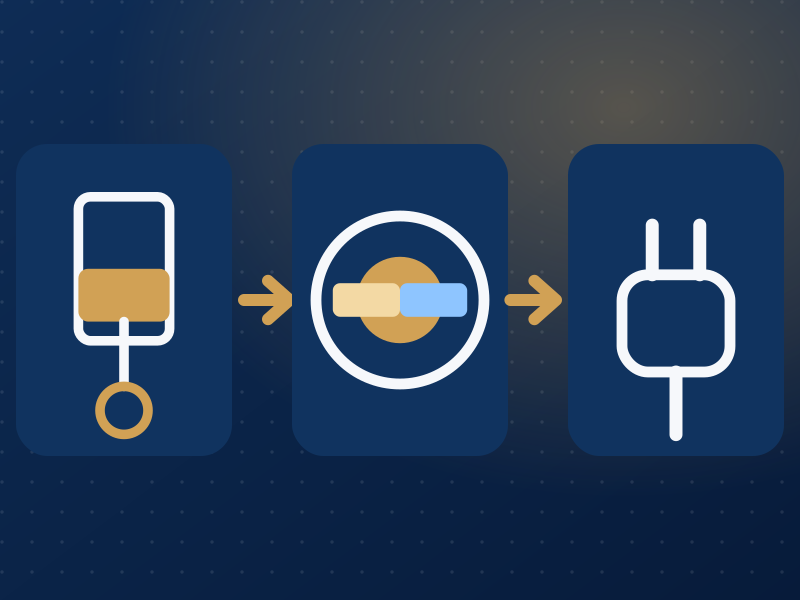
- You start the engine with a recoil cord, electric starter or remote.
- The engine turns the alternator’s rotor.
- The rotating magnetic field induces AC in the stator windings.
- The voltage regulator or capacitor controls the field strength so voltage stays near 120 V (or 240 V).
- The governor holds engine speed steady so frequency stays at 60 Hz in North America.
- Power flows to the outlets through circuit breakers and GFCI protection.
When more load is plugged in, the engine has to work harder, so the governor opens the throttle and it burns more fuel. That is why fuel use rises with load. See our fuel consumption calculator.
Conventional vs inverter generators
A conventional generator runs the engine at a fixed speed (about 3,600 rpm) so the alternator’s output is already 60 Hz. It is simple, durable and inexpensive, but noisy and less fuel efficient at light loads. Its output can have more distortion, which is less ideal for sensitive electronics.
An inverter generator produces high-frequency AC, converts it to DC and then uses electronics to create a clean 60 Hz sine wave. Because the engine does not need a fixed speed, it can slow down at light loads, making it quieter and more economical. The clean power suits laptops and other electronics. See our guide to running electronics on a generator.
Types of generators
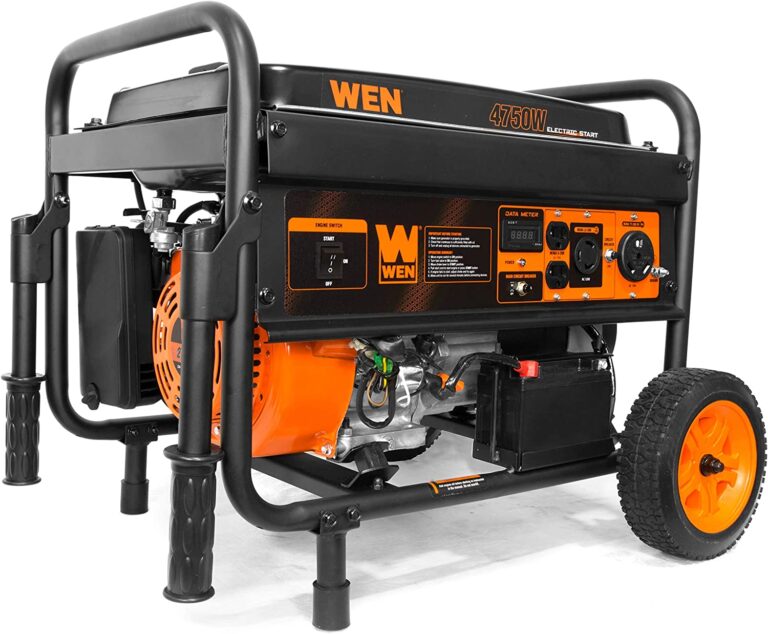
- Portable generators: wheeled or hand-carried units, typically 2,000 to 12,000 watts, for backup power, job sites and camping.
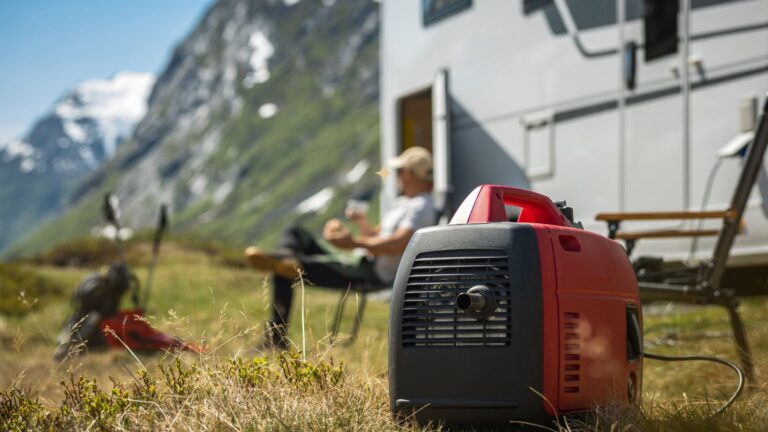
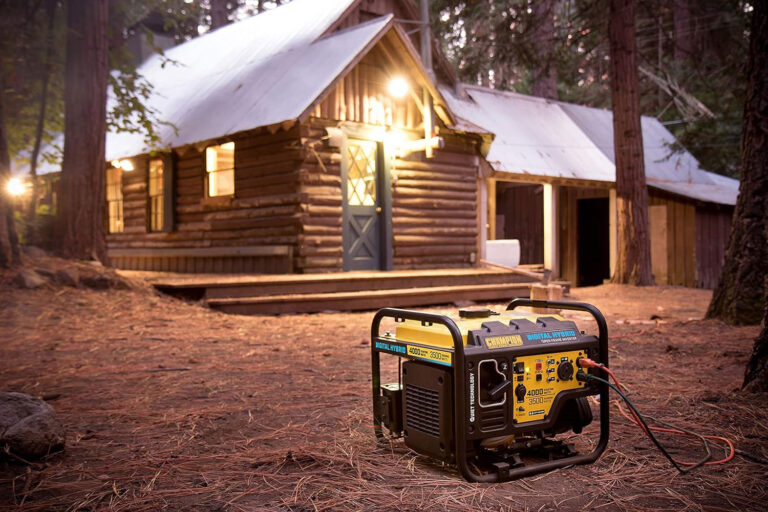
- Inverter generators: compact, quiet and efficient, usually 1,000 to 7,000 watts. Popular for camping and RVs.
- Home standby generators: permanently installed, run on natural gas or propane, and start automatically through an automatic transfer switch. Typically 7 to 26 kW.
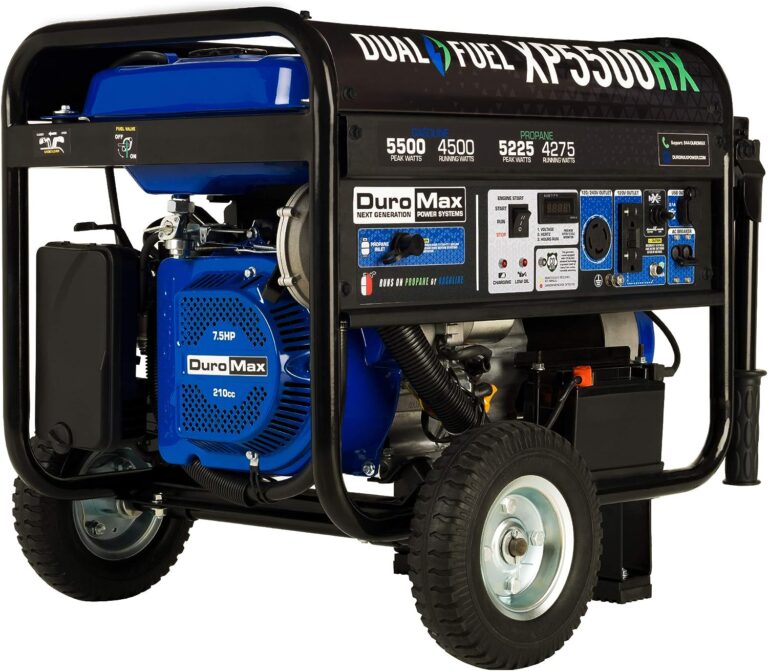
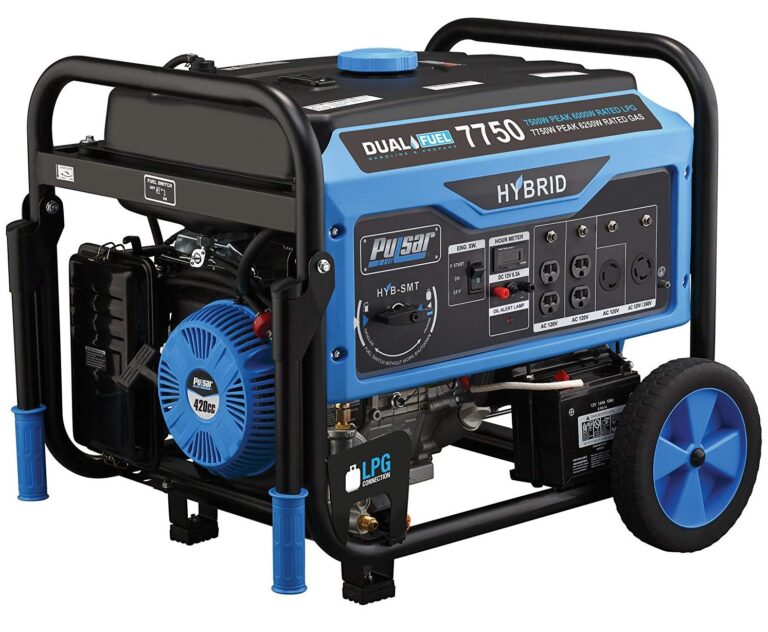
- Dual fuel generators: portable units that run on gasoline or propane. See our dual fuel generators category.
- Diesel generators: efficient and durable for heavy or long-duration use, common in commercial settings.
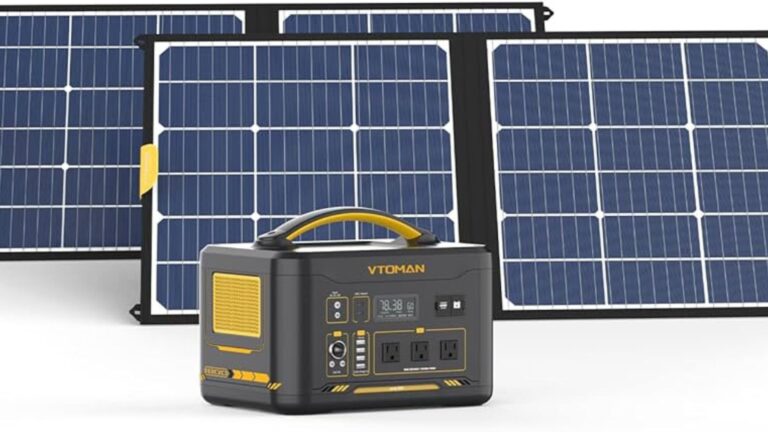
- Solar generators and power stations: actually batteries with inverters, which store energy (often charged by solar panels) instead of burning fuel. They are quiet and can be used indoors. See the battery runtime calculator.
Fuel types at a glance
| Fuel | Strengths | Trade-offs |
|---|---|---|
| Gasoline | Widely available, powerful, inexpensive units | Stores poorly, fire hazard, needs refueling |
| Propane (LP) | Stores for years, burns cleaner | About 10% less power than gasoline, more gallons used |
| Natural gas | Unlimited supply via utility pipe | Needs a gas line, may fail if supply is cut, less power |
| Diesel | Efficient, durable engines | Heavier, costlier, louder |
Our guide to generator fuels goes into detail.
Understanding the ratings
- Running (rated) watts is what the generator can supply continuously.
- Starting (surge) watts is the short burst available for starting motors.
- Voltage is 120 V for standard outlets and 240 V for large appliances.
- Runtime depends on tank size and load. Our runtime calculator estimates it.
To find the right size, add up your loads with the load calculator and then use the size calculator.
Safety basics
- Run generators outdoors only, at least 20 feet from the house with the exhaust pointing away. Carbon monoxide kills.
- Install battery-powered CO alarms in your home.
- Never backfeed power through a wall outlet. Use a transfer switch or interlock installed by an electrician. See safe ways to connect a generator.
- Let the engine cool before refueling and store fuel properly.
Frequently asked questions
Does a generator make electricity from fuel directly?
No. Fuel powers an engine, and the engine turns an alternator that produces the electricity.
Why does a generator run at 3,600 rpm?
A two-pole alternator makes one full AC cycle per revolution, so 3,600 rpm gives 60 cycles per second, which is 60 Hz.
What is the difference between a generator and an alternator?
The alternator is the part that produces AC electricity. The generator is the complete machine: engine, alternator and controls.
What is a generator vs an inverter?
An inverter converts DC to AC. An inverter generator uses one to produce cleaner power from a smaller, quieter engine.