How Far Should a Generator Be from the House?
Two different questions get mixed up here: how far a generator must sit from the house for safety, and how far it can sit from the panel before cable length becomes a problem. This guide covers the safety distance using sources we checked on 5 November 2026. Cable length depends on your load and wire, so it goes to a calculator and an electrician.
Distance from the house: sources differ
| Source | What it says |
|---|---|
| US Consumer Product Safety Commission | Use portable generators outside only, at least 20 feet from doors, windows and vents that could let carbon monoxide indoors. |
| Westinghouse WGen7500 manual | Choose a location at least 15 feet (4.5 m) from any building, other equipment or combustible material, and not near windows, doors or vents. |
| Champion 100809 manual | Keep all objects at least 5 feet (1.5 m) from the generator, with 3 feet (91.4 cm) of airflow clearance on all sides. Never place it near air intake vents or where exhaust fumes could reach occupied spaces. |
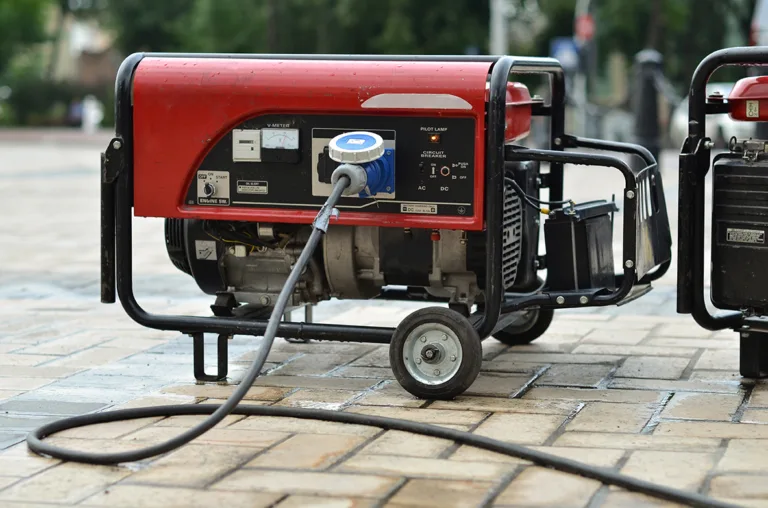
These figures answer different questions. The CPSC figure is about carbon monoxide, and the Champion figure is a clearance from objects, because the muffler and exhaust are hot. They do not conflict. For a portable generator, the longest distance (the CPSC’s 20 feet) is the one that protects against carbon monoxide, and the manufacturer’s clearances apply as well. Opening a window does not make a closer spot safe.
Standby generators
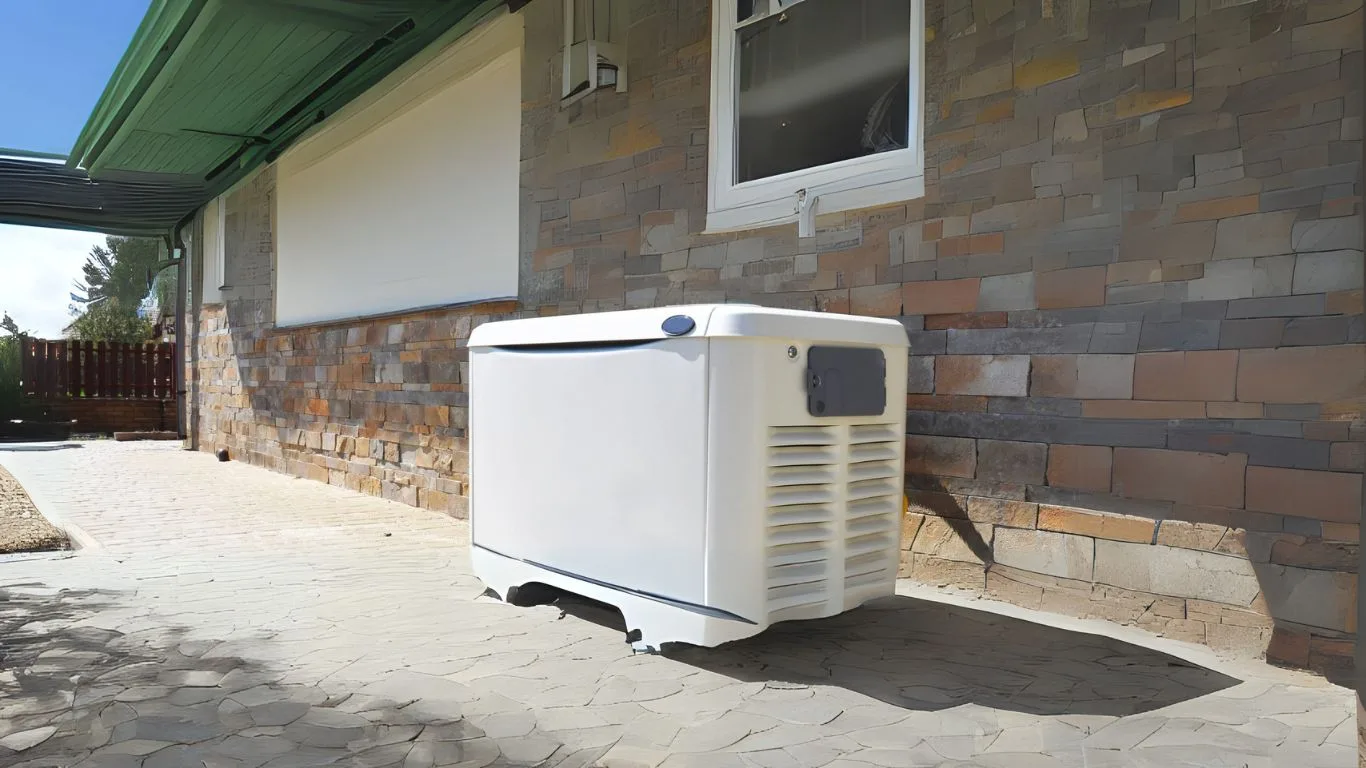
Permanently installed standby units follow the installation manual and local code. We did not read an installation manual for this guide, so we give no distance for them. A licensed installer and your local authority should confirm it.
Never inside
The CPSC says never to run a portable generator in a home, garage, basement, crawlspace, shed or other enclosed area. It also advises battery-operated or battery-backup CO alarms on every level, tested monthly. See the generator safety guide.
Distance from the panel
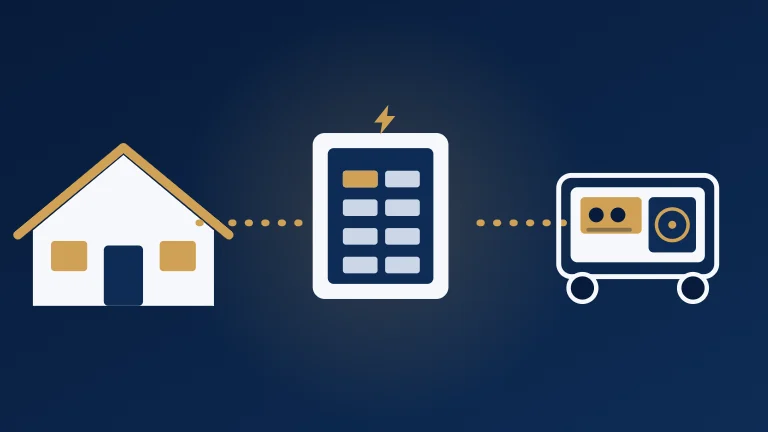
A longer cable run loses more voltage, and a heavier load loses more. Wire size depends on the current, the length and the cable, so we give no fixed gauge for a given distance. Use the wire size calculator and the watts to amps calculator, then have a licensed electrician confirm, since the connection must meet code. Connecting a generator to a house is covered in the transfer switch guide.
Other things to consider
- Exhaust direction. Point it away from the house. See the exhaust guide.
- A level, solid surface. Westinghouse’s manual calls for one, because a tilted unit can tip and spill fuel and oil.
- Weather. Both manuals say not to expose the generator to rain or use it in damp places without proper protection.
- Noise. Distance helps. See the quiet generators guide for stated ratings.
What we could not verify
- Code text. We did not read the National Electrical Code, so we do not quote its voltage-drop or wire-size rules.
- Other brands. We read two manufacturers’ manuals, not every brand’s.
- Local rules. These vary, so ask your building department.
Frequently asked questions
How far should a portable generator be from the house?
The CPSC says at least 20 feet from doors, windows and vents. Westinghouse’s manual says at least 15 feet from any building. Use the longer distance and read your own manual.
Can I run a generator in the garage with the door open?
No. The CPSC says never to run one in a garage or other enclosed area.
How long can the cable from generator to panel be?
It depends on the current and the wire. Use the wire size calculator and have an electrician confirm.