How to Connect a Generator to a House Without a Transfer Switch (Safe Options)
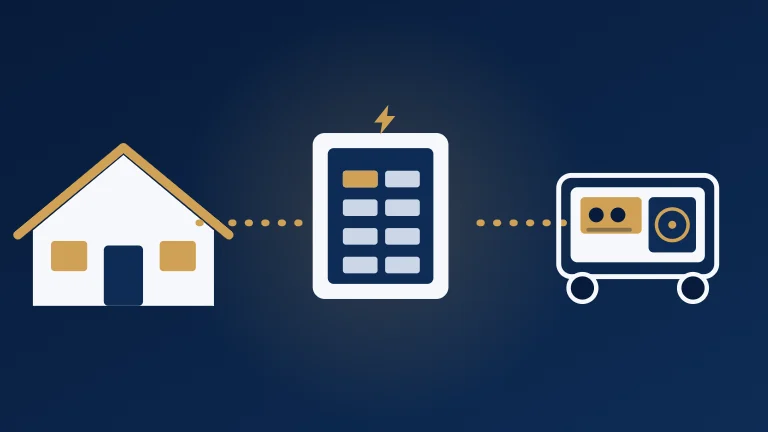
You can run your home’s essentials from a portable generator without a full transfer switch, but only in a few specific ways. The one method you must never use is plugging the generator into a wall outlet or dryer receptacle with a double-ended “suicide cord”. This guide explains why, then walks through the safe options from cheapest to most convenient, with the cord sizes, costs and operating steps for each.
Quick answer
- No wiring changes: run heavy-duty extension cords from the generator directly to the appliances you need.
- Power circuits in your panel: have an electrician install an interlock kit and a generator inlet box. This is the most common low-cost alternative to a transfer switch.
- Utility-approved meter adapter: some utilities allow a meter-socket transfer device, installed by the utility or its approved contractor.
- Never backfeed through an outlet. It is illegal in most places and can kill utility workers, start fires and destroy your generator.
Why backfeeding through an outlet is dangerous
When a generator is plugged into a household outlet, its power flows backward through your panel and out to the utility lines. The transformer on the pole steps that 240 volts up to thousands of volts, energizing lines that line workers believe are dead. Even if you remember to switch off your main breaker, a double-male cord leaves exposed, live prongs on the loose end, and nothing stops someone from turning the main back on while the generator is connected.
If grid power returns while the generator is still connected, the two sources collide out of phase. That can damage the generator, overheat wiring inside walls and start an electrical fire. Household outlet circuits are also usually rated for only 15 or 20 amps, far less than a mid-size generator can push through them.
In the United States, the National Electrical Code (NEC Article 702) requires transfer equipment that prevents a generator and the utility from being connected at the same time. An interlock kit or a transfer switch satisfies that requirement; an outlet backfeed never does.
Option 1: Extension cords straight to appliances
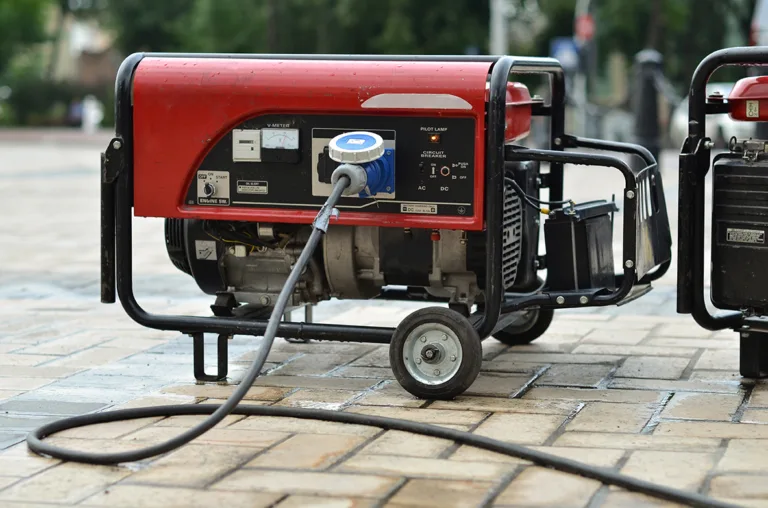
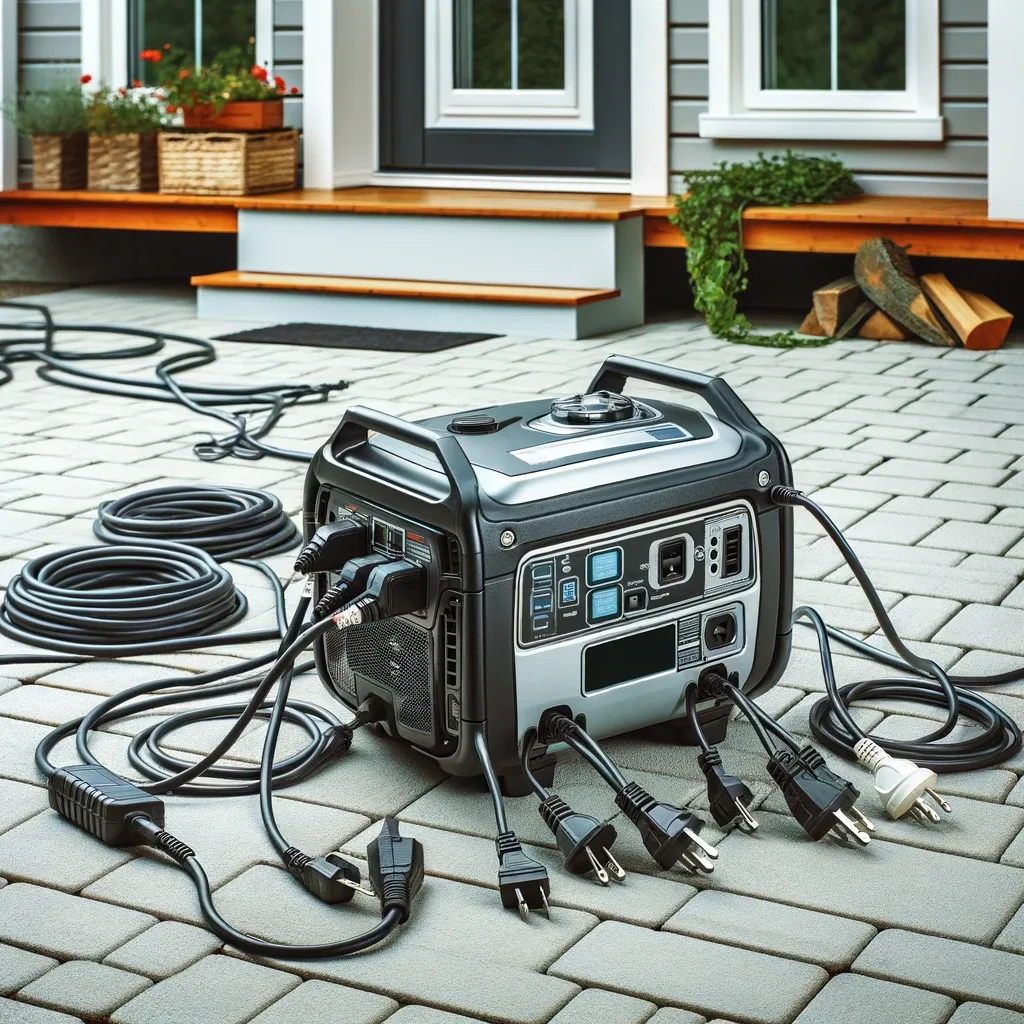
This is the only method that needs no electrical work at all. You place the generator outdoors, run outdoor-rated cords into the house and plug appliances such as the refrigerator, a freezer, lamps, a sump pump or a window air conditioner directly into them.
Best for: occasional, short outages and a handful of plug-in appliances.
Limitations: it cannot power hard-wired loads such as a furnace blower, well pump, water heater or central air conditioner, and cords through a door or window let in weather and carbon monoxide unless the gap is sealed.
Choosing the right cord gauge
Undersized cords overheat and cause voltage drop that strains motors. Use these as minimums for 120 V cords up to 50 feet; go one size heavier (a lower gauge number) for runs of 50 to 100 feet.
| Cord gauge (AWG) | Maximum continuous load | Approximate watts at 120 V | Typical use |
|---|---|---|---|
| 16 | 10 A | 1,200 W | Lamps, phone chargers, TV |
| 14 | 13 A | 1,560 W | Refrigerator, freezer, fan |
| 12 | 16 A | 1,920 W | Window AC, microwave, space heater |
| 10 | 24 A (30 A with TT-30 or L5-30 plugs) | 2,880 to 3,600 W | RV hookup, heavy tools |
Not sure how many watts your appliances use? Add them up with our generator load calculator, which accounts for the extra starting watts that refrigerators and pumps draw.
Option 2: Interlock kit and power inlet box
An interlock kit is a metal plate or slide bar mounted on your breaker panel cover. It physically prevents the main breaker and a dedicated generator breaker from being on at the same time, so the generator can only feed the panel after the house is disconnected from the grid. The generator plugs into a weatherproof power inlet box on the outside wall using a single heavy cord.
Technically an interlock is a form of transfer equipment, but it is far cheaper than a dedicated transfer switch, and it lets you power any circuit in your panel, including hard-wired 240 V loads such as a well pump, as long as the generator is big enough.
Matching the inlet to your generator
| Generator outlet | Inlet and breaker | Maximum power | Typical generator size |
|---|---|---|---|
| L5-30 (120 V only) | 30 A, single-pole | 3,600 W | 3,000 to 4,000 W |
| L14-30 (120/240 V) | 30 A, double-pole | 7,200 W | 5,000 to 8,000 W |
| 14-50 or CS6365 (120/240 V) | 50 A, double-pole | 12,000 W | 9,000 W and up |
A 120 V-only generator connected to a split-phase panel can power only one leg of the panel, so 240 V appliances will not run. Your electrician will confirm which outlet and inlet suit your generator and panel.
Installation requirements
- The interlock must be listed for your specific panel brand and model. Universal or homemade plates are often rejected by inspectors.
- Installation means working inside a live panel and adding a breaker and outdoor wiring. In most areas it requires a permit and a licensed electrician.
- Typical U.S. cost: about $50 to $200 for the kit and $500 to $1,000 installed with an inlet box, depending on your region and the distance between the inlet and the panel. See how far a generator can be from the panel.
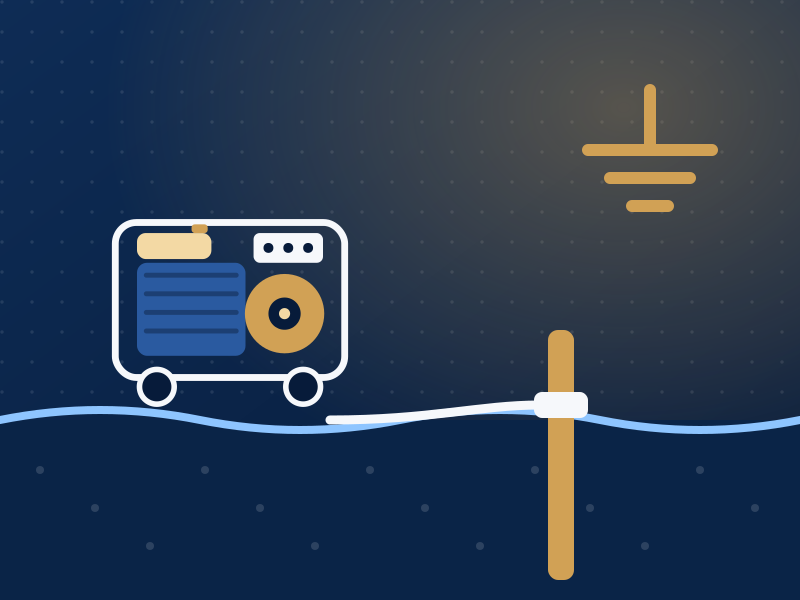
- Follow your generator manual and local code on grounding and bonding. Many portable generators need a bonding change when they feed a house panel.
Switching to generator power during an outage
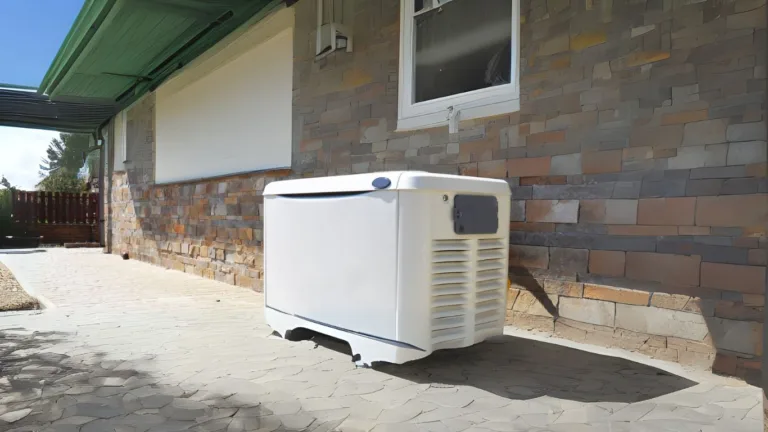
- Place the generator outdoors, at least 20 feet from the house, with the exhaust pointing away from doors, windows and vents.
- Turn off the main breaker and switch off most branch breakers.
- Slide the interlock plate so the generator breaker can be turned on.
- With the generator off, connect the cord to the generator and the inlet box.
- Start the generator and let it warm up for a minute or two.
- Turn on the generator breaker, then switch on branch circuits one at a time, starting with the largest motor loads, and keep the total within the generator’s running watts.
When utility power returns, reverse the process: turn off branch circuits, turn off the generator breaker, slide the interlock back, turn the main breaker on and then shut down the generator before disconnecting the cord.
Option 3: Meter-socket transfer device
Some utilities approve a collar that fits between the electric meter and the meter socket. It has a built-in generator inlet and automatically disconnects the house from the grid when the generator is plugged in. Installation requires removing the meter, so it is done by the utility or a contractor it approves. Ask your utility whether such devices are permitted in your area; availability is limited.
How the options compare
| Method | Hard-wired loads | Typical installed cost | Electrician required | Convenience |
|---|---|---|---|---|
| Extension cords | No | $50 to $200 for cords | No | Low |
| Interlock kit and inlet | Yes | $500 to $1,000 | Yes | Medium |
| Meter-socket device | Yes | Varies by utility | Utility or approved contractor | Medium |
| Manual transfer switch | Yes, selected circuits | $600 to $1,500 | Yes | High |
| Automatic transfer switch | Yes | $1,000 to $3,000+ | Yes | Highest |
| Outlet backfeed | Never safe or legal | |||
Costs are typical U.S. ranges and vary widely by region, panel type and distance. If you are comparing an interlock with a transfer switch, see why backup generators need a transfer switch.
Safety checklist
- Run the generator outdoors only, never in a garage, basement or porch, even with the door open.
- Install battery-powered or battery-backup carbon monoxide alarms on every level of the home.
- Turn off the generator and let it cool before refueling.
- Keep the generator dry, using a canopy or cover designed for running generators.
- Inspect cords for cuts and never run them under rugs, where heat cannot escape.
For more, see our full generator safety guide.
Frequently asked questions
Can I plug a generator into my dryer outlet?
No. Feeding power into a dryer receptacle is still backfeeding, with the same risks to utility workers and the same exposed-prong hazard on the cord. Use an interlock kit with a proper inlet box instead.
Is an interlock kit legal?
In most U.S. jurisdictions, yes, when the kit is listed for your panel and installed under a permit. Some localities require a transfer switch instead, so check with your local building department or electrician.
Will turning off the main breaker make a backfeed cord safe?
No. The cord still has live, exposed prongs, nothing prevents the main breaker being turned back on, and outlet circuits are not rated for the generator’s full output. It remains a code violation.
What size generator do I need to power circuits through an interlock?
Add the running watts of everything you want on at once, plus the largest starting surge. Most homes that want a refrigerator, furnace fan, lights, a well pump and internet need 5,000 to 7,500 running watts. Use our load calculator for your own appliances.
This guide is general information. Electrical codes vary by location, so have any connection to your home’s wiring installed and inspected by a licensed electrician.