Propane Generators: Output, Run Time and Cylinder Safety
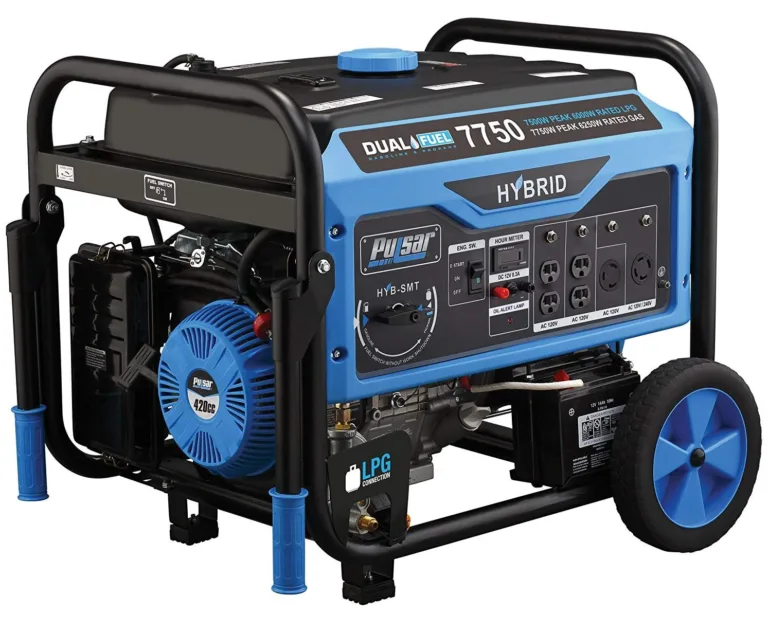
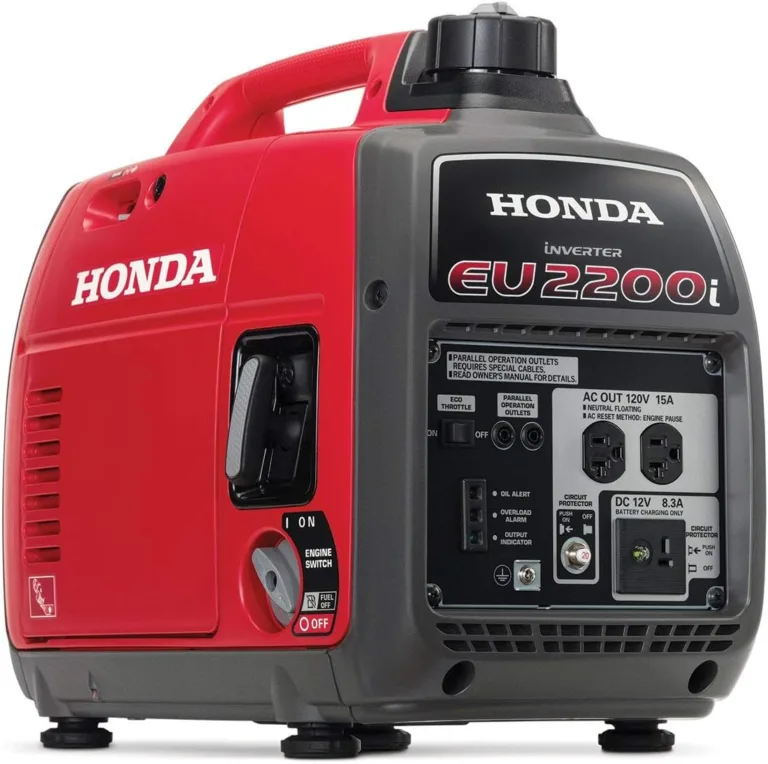
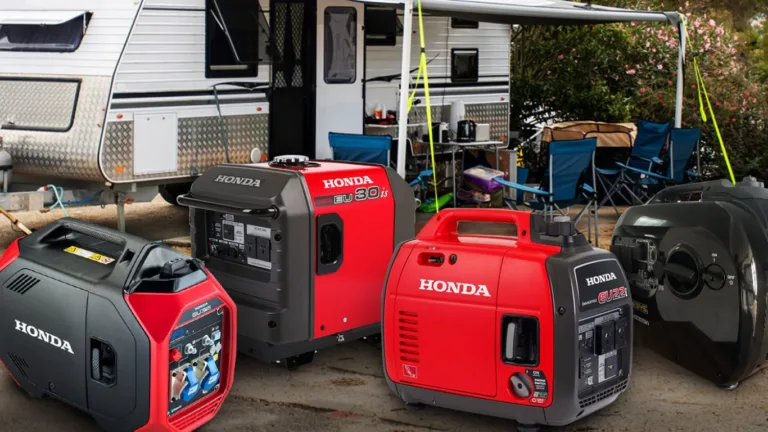
Propane is one of the fuels a portable generator can run on, usually as a dual fuel model that also takes gasoline. This guide sets out what the makers and manuals we checked say about propane operation: output, run time, cylinder safety and the models in our comparison tool. Figures were retrieved on 5 November 2026.
What changes when you run on propane
Every dual fuel portable in our database states a lower output on propane than on gasoline. Dividing each maker’s propane running watts by its gasoline running watts (a derived figure, not one the makers state) gives about 90% for eight models and 95% for the DuroMax XP13000EH.
| Model | Gasoline running W | Propane running W | Propane as % of gasoline (derived) |
|---|---|---|---|
| Champion 201050 | 3,000 | 2,700 | 90% |
| Champion 201278 | 3,500 | 3,150 | 90% |
| Champion 201321 | 3,650 | 3,285 | 90% |
| Westinghouse WGen3600DF | 3,600 | 3,240 | 90% |
| Westinghouse iGen5000DF | 3,900 | 3,500 | 90% |
| Westinghouse WGen7500DF | 7,500 | 6,750 | 90% |
| Westinghouse WGen9500DF | 9,500 | 8,500 | 89% |
| Westinghouse WGen14500DF | 14,500 | 13,000 | 90% |
| DuroMax XP13000EH | 10,500 | 10,000 | 95% |
Size your generator against the propane figure if propane is your main fuel. The size calculator and load calculator help you add up the watts.
Run time is not simply longer or shorter
Stated run times depend on the tank or cylinder the maker assumes and on the load. The Champion 201278 states 14 hours on gasoline and 21 hours on propane at 25% load, while the Westinghouse WGen14500DF states 16 hours on gasoline and 6 hours on propane at 25% load. So propane can run longer or shorter than a full gasoline tank. Check the figure and the load behind it, and use the fuel consumption calculator to estimate your own use.
Cylinder and hose safety
The Champion 201278 operator’s manual, which we read, gives these rules for propane (LPG):
- LPG vapors are heavier than air and settle in low places. LPG has a chemical added so you can smell leaks. If you smell a leak, turn off the gas supply immediately.
- Keep the cylinder upright, at ground level on a flat surface, away from heat, and out of sun and rain. Use an approved cylinder with an overfilling prevention device (OPD) valve.
- Check connections for leaks with soap and water. Growing bubbles mean a leak. If tightening a fitting does not stop it, do not use the generator.
- Never put the cylinder or hose in the path of the muffler exhaust. Never use a damaged hose or cylinder.
- Liquid propane can cause cold burns like frostbite, so wear gloves when connecting or disconnecting the cylinder.
- The included hose works with standard 20 and 30 pound cylinders, and the cylinder’s requalification date must not have expired.
Propane generators still make carbon monoxide. See the safety guide and the placement guide.
Models that run on propane
Smaller dual fuel models:
| Specification | Champion201278 4500W Electric Start Dual Fuel InverterInverter | Champion201321 4500W Dual Fuel Open Frame InverterInverter | WestinghouseWGen3600DFPortable | WestinghouseiGen5000DFInverter |
|---|---|---|---|---|
| Price and ownership cost | ||||
| Listed price (USD, estimate) | Not publishedChampion's product page does not state a price | Not publishedChampion's product page does not state a price | $629.00Westinghouse MSRP | $1,199.00Westinghouse MSRP |
| Price per rated watt (derived) | n/a | n/a | $0.17per watt, first fuel listed | $0.31per watt, first fuel listed |
| Warranty | 3 years limited, free lifetime technical support | 3 years limited, free lifetime technical support | 3 years residential, 1 year commercial | 3 years residential, 1 year commercial |
| Maintenance | Not stated | Not stated | Not stated | Not stated |
| Oil capacity | Not stated | Not stated | Not stated | Not stated |
| Power | ||||
| Rated output by fuel |
|
|
|
|
| Starting or surge watts | 4,500 W | 4,500 W | 4,650 W | 5,000 W |
| Fuel types | Gasoline / Propane | Gasoline / Propane | Gasoline / Propane | Gasoline / Propane |
| Engine | Not stated | Not stated | Not stated | Not stated |
| Displacement (cc) | 212 cc | 224 cc | 212 cc | 224 cc |
| Runtime, fuel use and running cost | ||||
| Fuel tank (gal) | 2.3 gal | 4.02 gal | 4 gal | 3.4 gal |
| Runtime on a tank, as stated |
|
|
|
|
| Fuel use, as stated | Not stated | Not stated | Not stated | Not stated |
| Fuel per kWh (derived) | 0.187 galgasoline at 25% load, from tank size and stated runtime | 0.201 galgasoline at 25% load, from tank size and stated runtime | 0.212 galgasoline at 50% load, from tank size and stated runtime | 0.194 galgasoline at 25% load, from tank size and stated runtime |
| Fuel cost per kWh at your price (derived) | ||||
| Fuel cost per hour at that load (derived) | ||||
| Size and comfort | ||||
| Weight (lb) | 99.2 lb | 92.6 lb | 120 lb | 104.7 lb |
| Dimensions | Not stated | Not stated | Not stated | Not stated |
| Noise (as stated) | 61 dB(A) at 23 ft | 64 dB(A) | 68 dBA | 52 dBA |
| Starting method | Electric, Recoil | Electric | Electric, Remote, Recoil | Electric, Remote, Recoil |
| Features | ||||
| Inverter output | Yes | Yes | No | Yes |
| Total harmonic distortion | under 3% | Not stated | 23% or less | 3% or less |
| Automatic voltage regulation (AVR) | Not stated | Not stated | Not stated | Not stated |
| CO sensor shutdown | Not stated | Not stated | No | No |
| Transfer switch ready | Not stated | Not stated | No | No |
| Parallel capable | Yes | Yes | No | Yes |
| Outlets and connections | 5-20R duplex, TT-30R, two USB, parallel port | TT-30R RV, 5-20R duplex, 12V 8A DC, parallel ports | 5-20R duplex, L5-30R, TT-30R | 5-20R duplex, two USB, TT-30R |
| Fit | ||||
| Suited to | Camping and outdoors, RV and travel trailer, Essential circuits | Camping and outdoors, RV and travel trailer, Essential circuits | Essential circuits, Construction and jobsite, Camping and outdoors | Camping and outdoors, RV and travel trailer, Essential circuits |
| Also worth knowing | Dual fuel; two USB ports; parallel port | Open frame design; battery included for electric start; parallel ports | Key fob start, 30A breaker | Inverter output, key fob start |
| Honest take | ||||
| Advantages |
|
|
|
|
| Drawbacks |
|
|
|
|
| Source | ||||
| Where the figures come from | Champion Power Equipment product pageRetrieved 2026-11-04 | Champion Power Equipment product pageRetrieved 2026-11-04 | Westinghouse product pageRetrieved 2026-11-02 | Westinghouse product page (address still shows the earlier iGen4500DF name; page lists the iGen5000DF)Retrieved 2026-11-02 |
Larger dual fuel models:
| Specification | WestinghouseWGen7500DFPortable | WestinghouseWGen9500DFPortable | DuroMaxXP13000EHPortable | WestinghouseWGen14500DFPortable |
|---|---|---|---|---|
| Price and ownership cost | ||||
| Listed price (USD, estimate) | $1,149.00Westinghouse MSRP; retailer links showed out of stock | $1,249.00Westinghouse MSRP | $1,299.00DuroMax listed price; shown against 1,699 USD compare-at price | $2,749.00Westinghouse MSRP |
| Price per rated watt (derived) | $0.15per watt, first fuel listed | $0.13per watt, first fuel listed | $0.12per watt, first fuel listed | $0.19per watt, first fuel listed |
| Warranty | 3 years residential, 1 year commercial | 3 years residential, 1 year commercial | 3 years | 3 years residential, 1 year commercial |
| Maintenance | Not stated | Not stated | Not stated | Not stated |
| Oil capacity | Not stated | Not stated | Not stated | Not stated |
| Power | ||||
| Rated output by fuel |
|
|
|
|
| Starting or surge watts | 9,500 W | 12,500 W | 13,000 W | 18,000 W |
| Fuel types | Gasoline / Propane | Gasoline / Propane | Gasoline / Propane | Gasoline / Propane |
| Engine | Not stated | Not stated | Not stated | Not stated |
| Displacement (cc) | 420 cc | 457 cc | 500 cc | 713 cc |
| Runtime, fuel use and running cost | ||||
| Fuel tank (gal) | 6.6 gal | 6.6 gal | 8.3 gal | 10.5 gal |
| Runtime on a tank, as stated |
|
|
|
|
| Fuel use, as stated | Not stated | Not stated | Not stated | Not stated |
| Fuel per kWh (derived) | 0.32 galgasoline at 25% load, from tank size and stated runtime | 0.174 galgasoline at 50% load, from tank size and stated runtime | 0.198 galgasoline at 50% load, from tank size and stated runtime | 0.161 galgasoline at 50% load, from tank size and stated runtime |
| Fuel cost per kWh at your price (derived) | ||||
| Fuel cost per hour at that load (derived) | ||||
| Size and comfort | ||||
| Weight (lb) | 201 lb | 211 lb | 234 lb | 352 lb |
| Dimensions | Not stated | Not stated | Not stated | Not stated |
| Noise (as stated) | 72 dBA | 74 dBA | 74 dB | 74 dBA |
| Starting method | Not stated | Electric, Remote, Recoil | Electric, Recoil | Electric, Remote |
| Features | ||||
| Inverter output | No | No | No | No |
| Total harmonic distortion | ≤23% | Not stated | Not stated | ≤5% |
| Automatic voltage regulation (AVR) | Not stated | Not stated | Yes | Not stated |
| CO sensor shutdown | Not stated | No | Yes | Not stated |
| Transfer switch ready | Yes | Yes | Not stated | Not stated |
| Parallel capable | No | No | No | No |
| Outlets and connections | Two 5-20R duplex, L14-30R 120/240V, two USB, transfer switch ready | Two 5-20R duplex, L14-30R, 14-50R, transfer switch ready | Two 5-20R, L5-30R, L14-30R, 14-50R, 12V; GFCI | Two 5-20R GFCI, L5-30R, L14-30R, 14-50R, two USB |
| Fit | ||||
| Suited to | Home backup, Construction and jobsite | Home backup, Construction and jobsite, Heavy duty | Home backup, Construction and jobsite, Heavy duty | Home backup, Construction and jobsite, Heavy duty |
| Also worth knowing | Dual fuel; two USB ports; transfer switch ready (ST switch) | Transfer switch ready (ST switch) | AVR, CO sensor shutdown, GFCI outlets | V-twin engine; no recoil start |
| Honest take | ||||
| Advantages |
|
|
|
|
| Drawbacks |
|
|
|
|
| Source | ||||
| Where the figures come from | Westinghouse product pageRetrieved 2026-11-04 | Westinghouse product pageRetrieved 2026-11-02 | DuroMax product pageRetrieved 2026-11-02 | Westinghouse product page (the older WGen12000DF address now shows this model)Retrieved 2026-11-04 |
Our database has no portable generators that run on propane only. Home standby units that run on propane or natural gas are covered in the Generac and standby page.
What we could not verify
- “Cleaner burning” and emissions. We found no emissions figures in the manuals, so we make no comparison.
- Fuel cost and shelf life of propane. We have no sourced propane prices. Champion’s 100809 manual says ethanol gasoline can last up to a year with stabilizer, and that gasoline left in the carburetor can gum it up within 2 to 4 weeks. We did not read a propane shelf-life statement.
- Cold-weather performance. We have no sourced figures.
- Prices. Champion states none, so it shows “Not stated”.
Related guides
- Dual fuel generators compared
- Propane vs dual fuel
- Portable propane generators
- Generator comparison tool
Frequently asked questions
Do generators produce less power on propane?
Every dual fuel model in our database states lower running watts on propane, at about 90% of the gasoline figure for most (95% for the DuroMax XP13000EH).
Can I run a propane generator indoors?
No. Propane generators still produce carbon monoxide. The CPSC says never to run a portable generator in a home, garage or other enclosed area.
What size propane cylinder do I need?
The Champion 201278 hose works with standard 20 and 30 pound cylinders. Check your own manual for the supported sizes.