Quiet Generators for Camping: Stated Noise Compared
Most portable generators are loud enough to spoil a quiet campsite, and many campgrounds enforce quiet hours. Inverter generators and battery power stations are the quietest options. This guide compares the quiet models in our generator comparison tool using the noise figures the makers publish, retrieved on 4 November 2026. It also explains why those figures cannot be ranked like a race.
Why you cannot rank noise ratings directly
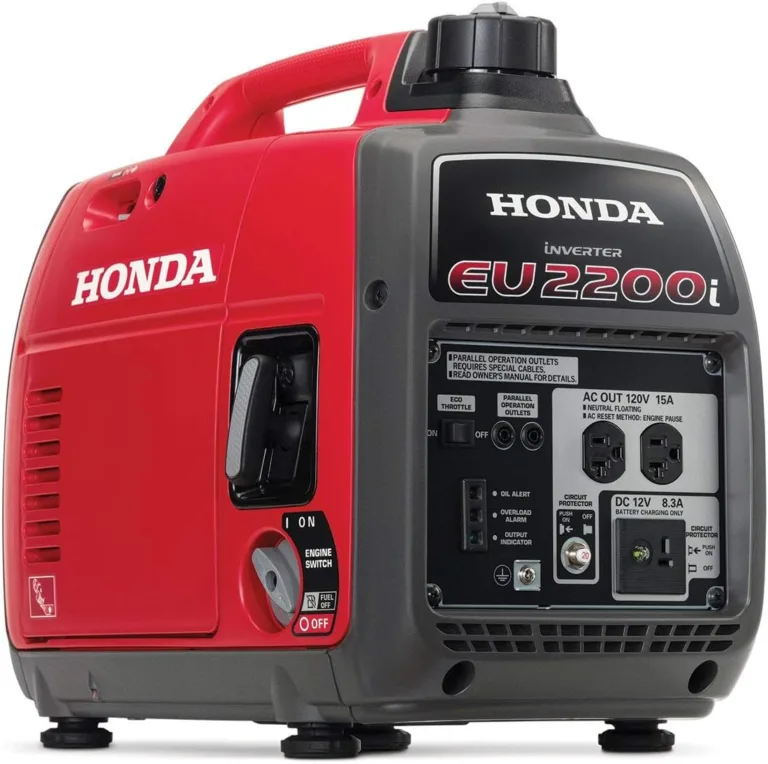
Makers measure noise at different distances and loads. Honda states 62 dB at rated load and 53 dB at 1/4 load for the EU2200i. Yamaha states a 57 to 65 dBA range for the EF2200iS and 54.5 dBA from 1/4 load to rated load for the EF3000iS, with no distance given on the pages we read. Champion states its figures at 23 ft, and Westinghouse states a single dBA figure without a distance. Treat the numbers as a guide, and look for the distance and load behind each one. Every 10 dB sounds roughly twice as loud to the ear, so a few dB between models is a small difference in practice.
Small models for camping (about 2,200 W and under)
| Specification | WestinghouseiGen2800 (listed at the iGen2500 address)Inverter | HondaEU2200iInverter | YamahaEF2200iSInverter | EcoFlowDELTA 2 Portable Power StationPower stations and solar generators |
|---|---|---|---|---|
| Price and ownership cost | ||||
| Listed price (USD, estimate) | $529.00Westinghouse MSRP | Not publishedHonda's spec release does not state a price | Not publishedYamaha's spec page does not state a price | Not publishedEcoFlow’s US page shows no price |
| Price per rated watt (derived) | $0.24per watt, first fuel listed | n/a | n/a | n/a |
| Warranty | 3 years residential, 1 year commercial | 3 years residential, 3 years commercial | 3 years limited | 5 years (US product page) |
| Maintenance | Not stated | Not stated | Not stated | – |
| Oil capacity | Not stated | Not stated | Not stated | – |
| Power | ||||
| Rated output by fuel |
|
|
|
|
| Starting or surge watts | 2,800 W | 2,200 W | 2,200 W | 2,700 W |
| Fuel types | Gasoline | Gasoline | Gasoline | Battery (LiFePO4) |
| Engine | Not stated | Not stated | Not stated | – |
| Displacement (cc) | 98 cc | 121 cc | 79 cc | – |
| Battery capacity (Wh) | – | – | – | 1,024 Wh |
| Battery type | – | – | – | LiFePO4 (LFP), 51.2 V |
| Solar input (W) | – | – | – | 500 W max |
| AC recharge | – | – | – | 1,200 W max (X-Stream fast charging) |
| Cycle life | – | – | – | 3,000 cycles to 80% capacity |
| Outage switchover | – | – | – | Switches to battery within 30 ms (EPS function, not a 0 ms UPS) |
| Runtime, fuel use and running cost | ||||
| Fuel tank (gal) | 0.98 gal | 0.95 gal | 1.24 gal | – |
| Runtime on a tank, as stated |
|
|
| – |
| Fuel use, as stated | Not stated | Not stated | Not stated | – |
| Fuel per kWh (derived) | 0.149 galgasoline at 25% load, from tank size and stated runtime | 0.26 galgasoline at 25% load, from tank size and stated runtime | 0.262 galgasoline at 25% load, from tank size and stated runtime | – |
| Fuel cost per kWh at your price (derived) | – | |||
| Fuel cost per hour at that load (derived) | – | |||
| Size and comfort | ||||
| Weight (lb) | 46.3 lb | 46.5 lb | 55.2 lb | 27 lb |
| Dimensions | Not stated | Not stated | Not stated | 15.7 x 8.3 x 11.1 in (400 x 211 x 281 mm) |
| Noise (as stated) | 52 dBA | 62 dB rated load, 53 dB at 1/4 load | 57 to 65 dBA (Yamaha lists a range) | Not stated |
| Starting method | Recoil | Recoil | Not stated | Push-button |
| Features | ||||
| Inverter output | Yes | Yes | Yes | Yes |
| Total harmonic distortion | ≤3% | Not stated | Not stated | Not stated |
| Automatic voltage regulation (AVR) | Not stated | Not stated | Not stated | Not stated |
| CO sensor shutdown | No | Not stated | Yes | No |
| Transfer switch ready | No | Not stated | Not stated | No |
| Parallel capable | Not stated | Yes | Yes | No |
| Outlets and connections | 5-20R duplex, two USB | One 20A 120V duplex, 12V 100W DC | 12V DC, 3 A | 6 AC (1,800 W total), 2 USB-A, 2 USB-A fast charge, 2 USB-C (100 W each), car outlet, 2 DC5521 |
| Fit | ||||
| Suited to | Camping and outdoors, RV and travel trailer, Tailgating | Camping and outdoors, RV and travel trailer | Camping and outdoors, RV and travel trailer | Camping and outdoors, RV and travel trailer, Essential circuits, Emergency backup |
| Also worth knowing | Two USB ports; no CO sensor | Eco Throttle, oil alert, fuel shut-off valve | CO sensor shutdown, parallel operation with a second unit | Expandable with extra batteries (up to 3 kWh per the US page); X-Boost to 2,200 W for resistive loads; no fuel, fumes or engine noise |
| Honest take | ||||
| Advantages |
|
|
|
|
| Drawbacks |
|
|
|
|
| Source | ||||
| Where the figures come from | Westinghouse product page (the iGen2500 address now shows the iGen2800)Retrieved 2026-11-04 | Honda Power Equipment technical specificationsRetrieved 2026-11-02 | Yamaha Motor Corporation USA specifications (2021 model page)Retrieved 2026-11-02 | EcoFlow DELTA 2 user manual V1.0 and US product pageRetrieved 2026-11-02 |
- Westinghouse iGen2800: 2,200 running watts, 52 dBA, 46.3 lb and a $529 MSRP. It has recoil start only and no CO sensor.
- Honda EU2200i: 1,800 running watts, 46.5 lb, 3 years of residential and commercial warranty, and 8.1 hours at 1/4 load. Honda does not publish a price on the release we reviewed.
- Yamaha EF2200iS: 1,800 running watts, 55.2 lb, a CO sensor shutdown and 10.5 hours at 25% load.
- EcoFlow DELTA 2: a 1,024 Wh battery with 1,800 W AC output and no engine, fuel or exhaust. EcoFlow’s manual does not state a noise figure, and a battery has a limited amount of energy, so it suits small loads and short stays.
Mid-size models (about 3,000 W and up)
| Specification | Champion100809 4000W InverterInverter | YamahaEF3000iS / EF3000iSEBInverter | Champion201278 4500W Electric Start Dual Fuel InverterInverter | Predator (Harbor Freight)3500 Super Quiet with CO SecureInverter |
|---|---|---|---|---|
| Price and ownership cost | ||||
| Listed price (USD, estimate) | Not publishedChampion's product page does not state a price | Not publishedYamaha does not state a price on the specification page | Not publishedChampion's product page does not state a price | $799.99Harbor Freight listing; sale prices vary |
| Price per rated watt (derived) | n/a | n/a | n/a | $0.27per watt, first fuel listed |
| Warranty | 3 years limited, free lifetime technical support | 3 years limited | 3 years limited, free lifetime technical support | not stated in the sources reviewed |
| Maintenance | Not stated | Not stated | Not stated | Not stated |
| Oil capacity | Not stated | Not stated | Not stated | Not stated |
| Power | ||||
| Rated output by fuel |
|
|
|
|
| Starting or surge watts | 4,000 W | 3,000 W | 4,500 W | 3,500 W |
| Fuel types | Gasoline | Gasoline | Gasoline / Propane | Gasoline |
| Engine | Not stated | Not stated | Not stated | Not stated |
| Displacement (cc) | 149 cc | 171 cc | 212 cc | 212 cc |
| Runtime, fuel use and running cost | ||||
| Fuel tank (gal) | 1.54 gal | 3.4 gal | 2.3 gal | 2.33 gal |
| Runtime on a tank, as stated |
|
|
|
|
| Fuel use, as stated | Not stated | Not stated | Not stated | Not stated |
| Fuel per kWh (derived) | 0.205 galgasoline at 25% load, from tank size and stated runtime | 0.261 galgasoline at 25% load, from tank size and stated runtime | 0.187 galgasoline at 25% load, from tank size and stated runtime | 0.283 galgasoline at 25% load, from tank size and stated runtime |
| Fuel cost per kWh at your price (derived) | ||||
| Fuel cost per hour at that load (derived) | ||||
| Size and comfort | ||||
| Weight (lb) | 48.1 lb | 156 lb | 99.2 lb | 102 lb |
| Dimensions | Not stated | Not stated | Not stated | Not stated |
| Noise (as stated) | 64 dBA at 23 ft | 54.5 dBA from 1/4 load to rated load (no measurement distance stated) | 61 dB(A) at 23 ft | 56 dB(A) at 23 ft, 25% load |
| Starting method | Recoil | Not stated | Electric, Recoil | Electric, Recoil |
| Features | ||||
| Inverter output | Yes | Yes | Yes | Yes |
| Total harmonic distortion | under 3% | Not stated | under 3% | Not stated |
| Automatic voltage regulation (AVR) | Not stated | Not stated | Not stated | Not stated |
| CO sensor shutdown | Yes | Not stated | Not stated | Yes |
| Transfer switch ready | No | Not stated | Not stated | Not stated |
| Parallel capable | Yes | Not stated | Yes | Yes |
| Outlets and connections | 5-20R duplex, TT-30R (25 A), 12V DC, parallel outlets | Not stated on the page; 12 V DC at 12 A | 5-20R duplex, TT-30R, two USB, parallel port | L5-30, two 5-20, 12V DC |
| Fit | ||||
| Suited to | Camping and outdoors, RV and travel trailer, Tailgating | Camping and outdoors, RV and travel trailer, Essential circuits | Camping and outdoors, RV and travel trailer, Essential circuits | Camping and outdoors, RV and travel trailer, Essential circuits |
| Also worth knowing | CO Shield automatic shutdown, parallel kit sold separately | Two variants: iS at 136 lb and iSEB at 156 lb; the 156 lb weight shown is the iSEB | Dual fuel; two USB ports; parallel port | CO Secure shutdown, battery included, digital display |
| Honest take | ||||
| Advantages |
|
|
|
|
| Drawbacks |
|
|
|
|
| Source | ||||
| Where the figures come from | Champion Power Equipment product pageRetrieved 2026-11-02 | Yamaha specification pageRetrieved 2026-11-04 | Champion Power Equipment product pageRetrieved 2026-11-04 | Harbor Freight listing and owner's manual (item 59137 / 71358)Retrieved 2026-11-02 |
- Champion 100809: 3,000 running and 4,000 peak watts, 64 dBA at 23 ft, 48.1 lb and a CO Shield shutdown.
- Yamaha EF3000iS/iSEB: 2,800 running watts, 54.5 dBA and 18.6 hours at 1/4 load. It weighs 136 lb (iS) or 156 lb (iSEB).
- Champion 201278: a dual fuel model at 3,500 W on gasoline, 61 dB(A) at 23 ft and 99.2 lb. See the dual fuel inverter guide.
- Predator 3500 with CO Secure: 3,000 running watts, 56 dB(A) at 23 ft at 25% load, 102 lb and a $799.99 listed price.
How to choose
| If you want | Look at |
|---|---|
| The lightest engine-driven unit | Westinghouse iGen2800 (46.3 lb) or Honda EU2200i (46.5 lb) |
| No engine noise at all | A battery power station such as the EcoFlow DELTA 2, if its energy fits your needs |
| Enough power for an RV air conditioner | A 3,000 W-class unit, after checking the air conditioner’s nameplate |
| A long run time | Yamaha EF3000iS (18.6 hours at 1/4 load), at the cost of weight |
Add up what you will run with the load calculator. For RV use, the RV dual fuel guide lists models with a TT-30R outlet.
Camping rules
- Run the generator outdoors, away from tents, windows and doors, because of carbon monoxide. Read the generator safety guide.
- Many campgrounds limit generator hours or noise. Check the rules where you stay.
What we could not verify
- Prices. Only Westinghouse and Harbor Freight state prices on the pages we used; the others show “Not stated”.
- Noise distances. Yamaha and Westinghouse do not state a distance on the pages reviewed.
- Other brands. We did not add models we could not source from the maker, which is why the Honda EU3000iS, Jackery and others are missing.
Related guides
- Best inverter generators
- Camping generators
- Solar generators and power stations
- Generator comparison tool
Frequently asked questions
What is the quietest generator for camping?
Among the engine-driven models we track, the Westinghouse iGen2800 states 52 dBA and the Yamaha EF3000iS states 54.5 dBA, but the makers measure differently. A battery power station has no engine and is quieter still while its charge lasts.
Is an inverter generator quieter than a conventional one?
Usually. Inverter models adjust engine speed to the load, which is why Honda states a lower dB figure at 1/4 load than at rated load.
Can I run a CPAP or laptop on an inverter generator?
Inverter models are designed for sensitive electronics. The Westinghouse iGen2800 states THD of 3% or less. See the electronics guide.