Best Generators for Home Backup: How to Choose by Watts
The right backup generator for a house depends on what you need to keep running, not on the largest number on the box. This guide shows how to size one, how a transfer switch fits in, and which models in our comparison tool suit each approach. All figures come from manufacturers’ pages, checked on 2 November 2026.
Step 1: decide what you want to keep running
List the circuits you need during an outage, such as the refrigerator, a few lights, the furnace fan, a sump pump and phone chargers. Note each item’s running watts and the starting surge for motors. The appliance wattage chart has typical numbers, and the load calculator adds them up. Running watts decide the size you need. Starting watts decide whether the generator can cope with the surge when a motor starts.
Step 2: pick an approach
Essentials only (about 3,000 to 3,900 running watts)
A mid-size unit can run a refrigerator, lights and a few more circuits if you manage the load. In our comparison, the Westinghouse iGen5000DF offers 3,900 running watts on gasoline, the WGen3600DF offers 3,600 and the Champion 201050 offers 3,000. Champion states that its 100809 inverter is not recommended for emergency home backup, so check each maker’s intended use.
Whole-circuit backup (9,500 to 10,500 running watts)
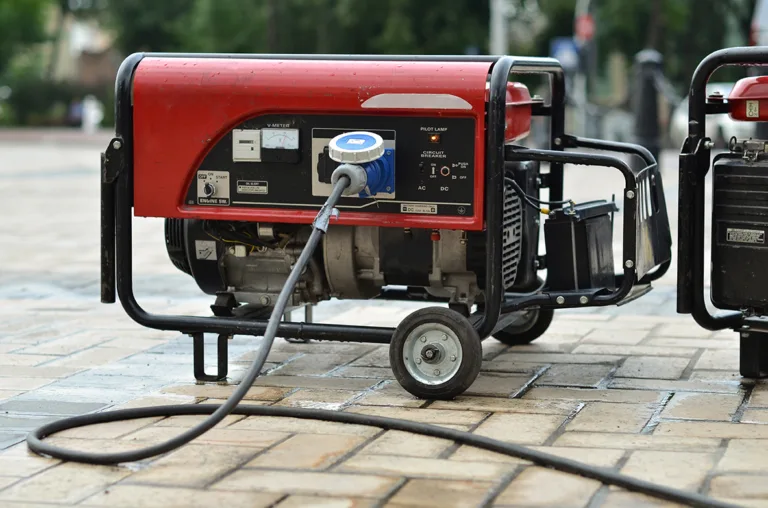
A large conventional unit can power many circuits through a transfer switch. The Westinghouse WGen9500DF lists 9,500 running watts, a 14-50R outlet and “transfer switch ready.” The DuroMax XP13000EH lists 10,500 running watts, AVR and CO sensor shutdown, with a 14-50R outlet. Both run on gasoline or propane.
Quiet midsize (5,500 rated watts)
The Honda EU7000iS is rated at 5,500 W and 58 dB, with 6.4 hours on a tank at rated load. At 263.2 lb it is the heaviest inverter we compare, and Honda does not publish a price on its spec sheet.
Step 3: connect it safely
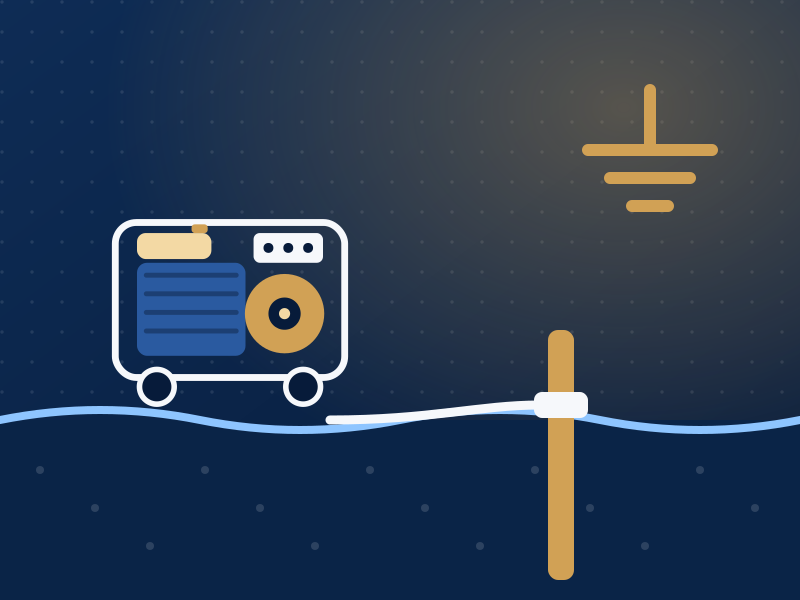
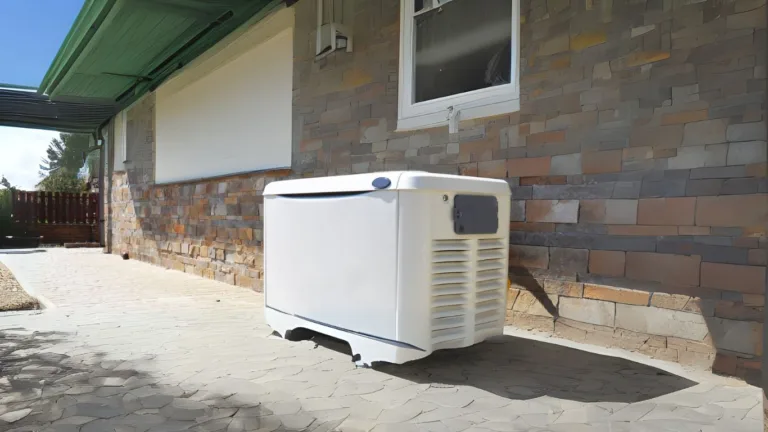
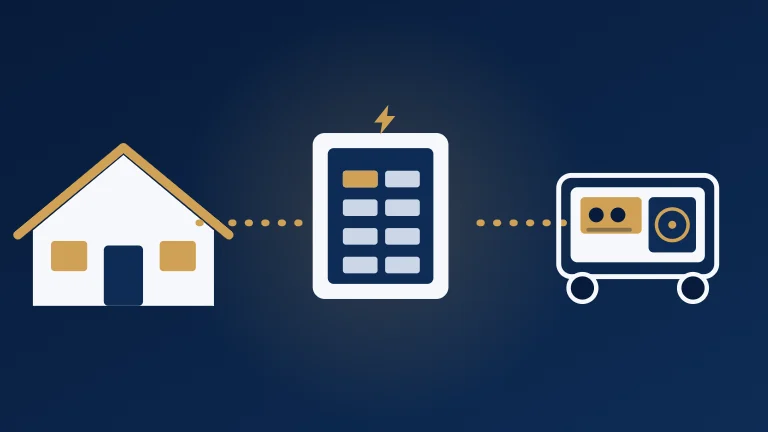
Never plug a generator into a wall outlet. That can back-feed the grid and injure utility workers. Use a transfer switch or interlock installed by a licensed electrician. Our guides cover why you need a transfer switch and how the connection works. Keep the generator outdoors and well away from windows, because carbon monoxide kills. See how to exhaust a portable generator and generator safety tips.
Dual fuel for backup
Dual fuel models run on gasoline or propane. Propane stores well, but output drops slightly: the WGen9500DF falls from 9,500 to 8,500 running watts on propane, and the XP13000EH from 10,500 to 10,000. Our propane vs dual fuel guide goes further.
How long will it run?
The WGen9500DF states 12 hours on its 6.6 gal tank at 25% load and 8 hours at 50% load. The XP13000EH states 17 hours at 25% load and 8 hours at 50% load on 8.3 gal. Runtime depends heavily on load, so use the runtime calculator for your own numbers.
Frequently asked questions
How big a generator do I need for a house?
Add the running watts of what you want to power, then allow for the largest starting surge. Essentials often fit under 4,000 W. Whole-circuit backup is typically in the 9,000 W range or more.
Do I need a transfer switch?
Yes, for any generator that feeds your house wiring. A transfer switch or interlock installed by a licensed electrician prevents back-feeding the grid.
Which generator in your comparison is listed as transfer switch ready?
Only the Westinghouse WGen9500DF says so on the pages we reviewed. For other models the table shows No or Not stated, so check with the maker and your electrician.
Is a CO sensor important?
It is a useful safeguard, but it does not replace placing the generator outdoors, well away from the house. Among the large units we compare, the XP13000EH lists CO sensor shutdown and the WGen9500DF does not.