Do You Need to Ground a Portable Generator? Grounding and Bonding Explained
Many people hammer a ground rod next to their generator because they think it is required. For most portable generators powering things through cords, it is not, and the instructions in your manual matter more than internet advice. This guide explains the difference between grounding and bonding, when a ground rod is needed and when connecting a generator to a house changes the rules.
Important: this is general information. Your generator’s manual and your local electrical code decide what applies to you. Any connection to a building’s wiring should be installed by a licensed electrician.
Grounding vs bonding
- Bonding connects metal parts together so they stay at the same electrical potential. In a portable generator, the metal frame is bonded to the outlets’ ground terminals, so a fault in an appliance sends current back through a safe path and trips a breaker instead of energizing the appliance case.
- Grounding connects the system to the earth through a ground rod or other electrode. It helps control voltage surges such as lightning and contact with higher-voltage lines.
Shock protection on a portable generator comes mainly from bonding, plus GFCI protection, rather than from a rod in the dirt.
Do portable generators need a ground rod?
In the United States, the National Electrical Code (NEC 250.34) says a portable generator does not need a grounding electrode when both of these are true:
- The generator supplies only equipment mounted on the generator, or cord-and-plug equipment plugged into the generator’s own outlets.
- The metal parts of the generator and the ground terminals on its outlets are bonded to the generator frame.
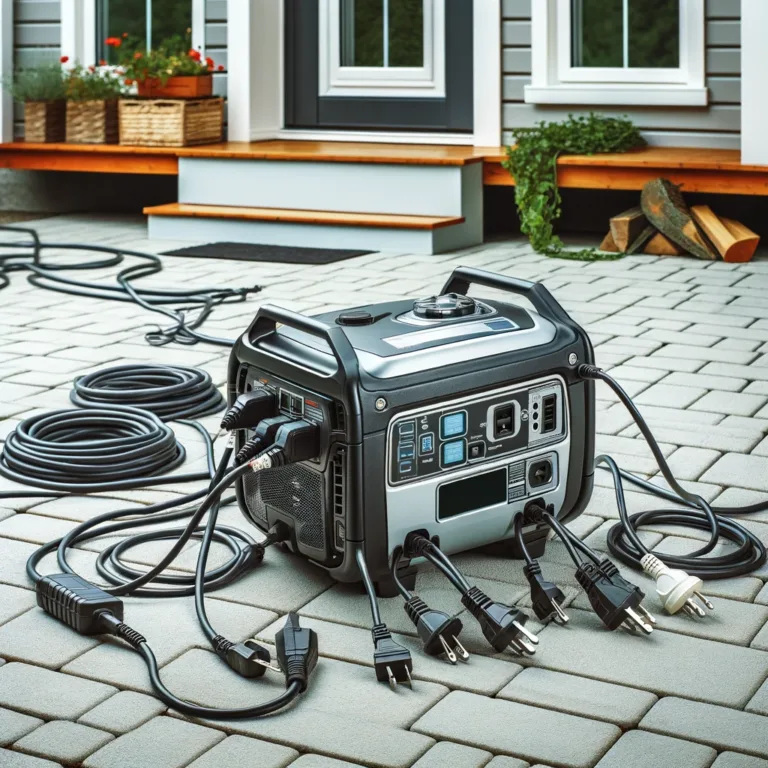
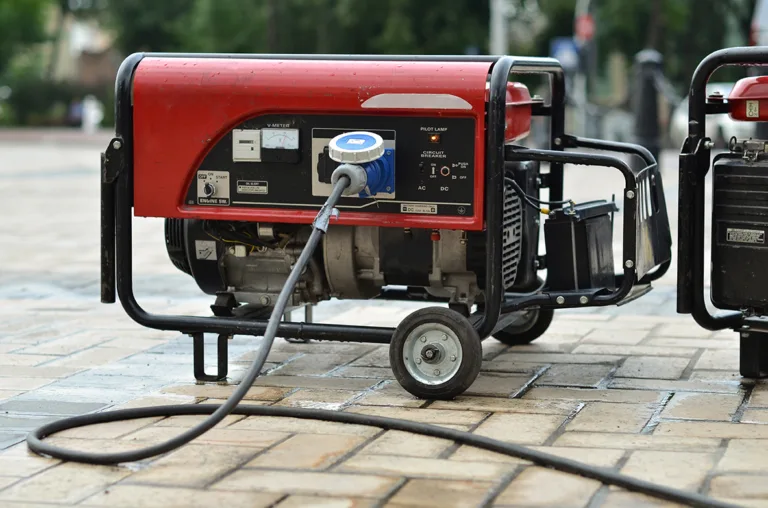
Most portable generators meet both conditions straight from the factory. If you only plug lights, tools and appliances into the generator, a ground rod is generally unnecessary, and the manual usually says so. Some manufacturers include a grounding lug anyway, and the manual tells you when to use it. Follow it.
When connecting to a house changes things
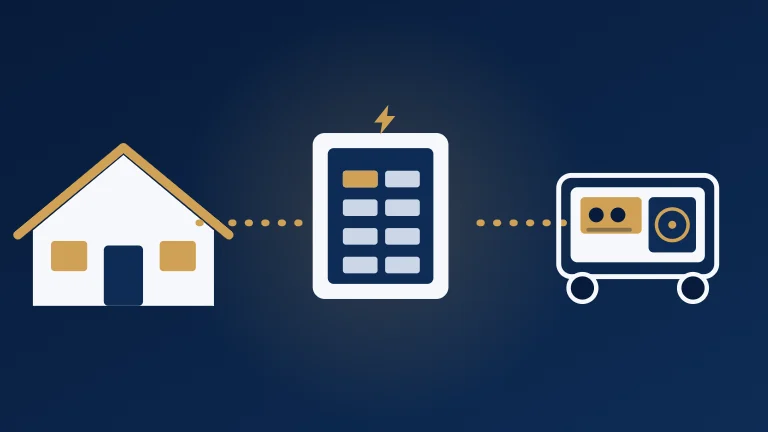
If the generator feeds your home’s wiring through a transfer switch or an interlock, the grounding and neutral setup depends on how the transfer equipment works:
- Transfer switch that does not switch the neutral (the usual 2-pole residential type): the house neutral stays connected to the utility’s grounded neutral. The generator’s neutral should not be bonded to its frame, or current can take two paths and create shock and fire hazards. Many portable generators are shipped with a bonded neutral, so a bonding screw or jumper must be removed or a floating-neutral model chosen. Check the manual.
- Transfer switch that switches the neutral (3-pole or 4-pole): the generator becomes a separately derived system. Its neutral is bonded to the frame, and a grounding electrode connection is normally required.
- Interlock kits are electrically different, because the generator feeds the main panel’s neutral directly, so the neutral and ground arrangement must be planned by the electrician.
This is the main reason to have an electrician set up the connection. Getting the neutral bonding wrong is a hidden safety problem. Read our guide to connecting a generator to a house safely.
Standby generators
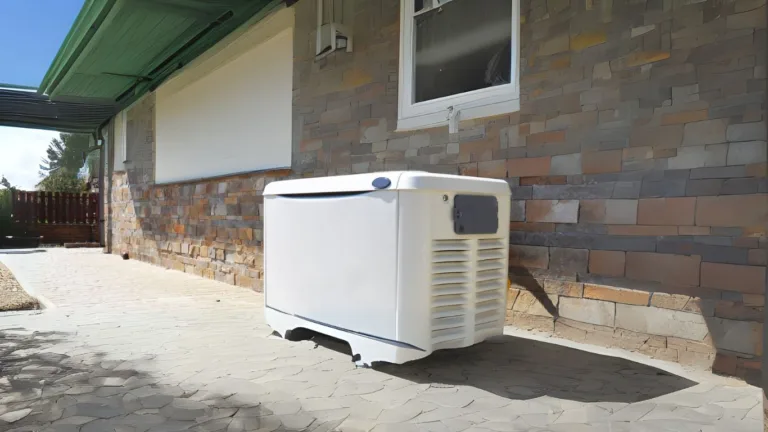
Permanently installed home standby generators are connected to a grounding electrode system, usually a ground rod or rods driven by the installer and connected to the main panel’s grounding system. This is part of the professional installation and inspection.
If you do need a ground rod
When your manual or an electrician tells you to ground the generator, the usual setup is:
- An 8-foot copper-clad (or galvanized steel) ground rod driven fully into the earth.
- A copper grounding conductor from the generator’s ground lug to the rod, sized per the code and the manual (commonly 6 AWG for larger systems).
- A secure, corrosion-resistant clamp rated for direct burial.
Do not use a gas pipe as a ground. Do not rely on a metal fence post or an improvised stake.
GFCI protection
- Use the generator’s GFCI outlets for tools and appliances, especially outdoors or on damp ground.
- Test the GFCI buttons occasionally per the manual.
- If you use a long extension cord in wet conditions, use a GFCI-protected cord or adapter.
Other safety essentials
- Keep the generator dry. Use a canopy designed for running generators, and never operate one in the rain on bare ground without protection.
- Run it outdoors, far from windows, doors and vents, and install carbon monoxide alarms in your home. See generator safety tips.
- Use cords rated for outdoor use and heavy enough for the load. Our wire size calculator helps.
- Never backfeed through a wall outlet.
Frequently asked questions
Do I need to ground my portable generator?
Usually not, if it only powers cord-and-plug equipment from its own outlets and the frame is bonded to the outlet grounds. Check your manual.
Does a ground rod protect me from electric shock?
A ground rod is not the main shock protection on a portable generator. Bonding and GFCI protection are.
What is a bonded neutral and why does it matter?
A bonded neutral has the generator’s neutral tied to its frame. That is correct for a standalone generator, but can be wrong when the generator feeds a house through a transfer switch that does not switch the neutral.
Do standby generators need grounding?
Yes. A licensed installer connects them to the home’s grounding electrode system.
What size ground wire do I use?
That depends on the equipment and the code, so follow your manual or electrician rather than guessing.
Related guides
- Why backup generators need a transfer switch
- How far can a generator be from the panel?
- All installation and safety guides
Electrical codes change and vary by location. Have a licensed electrician verify any generator connection and grounding arrangement.